Problem-first, no scaffolding
The audience has software experience, so we do not burn classes installing things: that is pre-work, documented step by step.
Training service
Dilux AI Builders Lab is a hands-on program where each participant builds a real application — the same one, several different ways — until they feel first-hand the difference between vibecoding, specifying and orchestrating agents.
The idea
Knowledge travels, code gets rebuilt. Each method starts from scratch in its own repository, from the same PRD, the same guardrails and the same skills. What gets compared is the method, not the starting point.
The audience has software experience, so we do not burn classes installing things: that is pre-work, documented step by step.
Classes are real demonstration, not slide reading. You see the mistake, the fix and the decision as they happen.
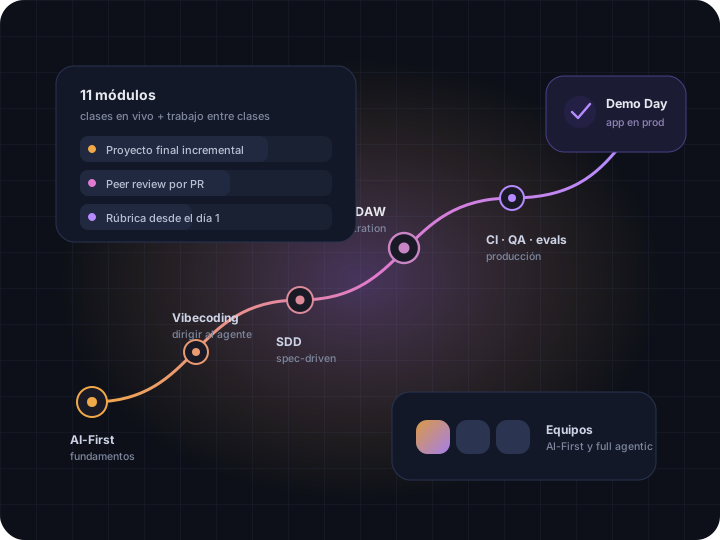
Each module produces a piece of the deliverable. By Demo Day the app is already built in parts: no final panic sprint.
Pull-request review between peers, with a short checklist and AI-assisted review. It is the real practice and it is also course content.
The final project spec and the Demo Day rubric are handed out in the first class. Every class has an explicit purpose.
Access to recordings and materials. Missing a class does not put anyone out of the program’s rhythm.
Syllabus
High-level content. The detail of each lesson is tuned to your team’s stack and starting point.
What genuinely changed in how software gets built, and how to write a PRD an agent can actually use.
Directing the agent with judgment: context, iteration, and the limits of working without a safety net.
Git, your own skills and discipline. The same app, now versioned and with tools the participant built.
Specifying before implementing, with Spec Kit. The project constitution and what a team gains by writing one.
Dilux Agentic Workflow installed in the participant’s repo, customized, and a full first feature with Claude. Assessed module.
The same method ported to another tool. You see what belongs to the framework and what belongs to the agent.
A third port. By now the difference between method and tool no longer needs explaining: it shows.
Continuous integration, pull requests and AI-assisted code review — the flagship skill of 2026.
Testing and evals: how to test what an agent built and how to measure whether it improves or degrades.
Deployment, observability and the hardest part: getting the whole team to adopt the way of working.
Bonus module: what is emerging and has not settled yet, with the judgment to separate signal from noise.
Each participant presents their application in production and defends it against the rubric handed out on day one.
The syllabus adapts: if your team already specifies well, M4 gets shorter and orchestration and evals get deeper.
For your organization
The program does not end at “your people know how to use an agent”. It ends with teams able to build the software your company or professional practice needs, at the level of human intervention each kind of work demands.
Who is behind this
We do not sell a theory: we ship to production the very thing we teach.

Tell us how many people you are and where they start from. We will put together a proposal with the syllabus tuned to your context.
You are on the private preview list. We will email you at the address you provided as soon as a seat opens.
Request number: —